| About- France - home | French life | Paris | The regions of France |
An
A-Z
Dictionary of France
L
About-France.com the connoisseur's guide to France - French institutions, society, travel and tourism.
|
A dictionary of France, including institutions, places, a few significant people (excluding film stars and "people" people), French specialities, and a selection of other useful or intriguing expressions....
L’Oréal : L’Oréal is France’s and the world’s largest cosmetics and beauty products company. In 2006, it took over the Body Shop in a move that angered many of the latter’s customers, since L’Oréal uses animal testing in its laboratories – a practice contrary to the Body Shop ethic. L’Oréal is a CAC 40 company. L'Oreal is owned 30% by the Bettencourt family and 26% by Nestlé. In 2010, chief shareholder Liliane Bettencourt, daughter of the company's founder, was at the centre of a media frenzy over allegations of tax evasion and political favours involving President Sarkozy's Minister for the Budget Eric Woerth. Laguiller, Arlette: Born 1940. The Passionaria of French politics in the last third of the 20th Century. A Trotskyist, she was the high-profile leader of the left-wing Lutte Ouvrière (LO) political party for over 30 years, and holds the record for the number of times she has stood as a candidate in Presidential elections, six. In 2002, she polled over 5% of the vote. Laïcité,
la
: Many people in France get passionate about the principle of laïcité
to a degree that their neighbours often find hard to understand. Laïcité
litterally translates as ‘secularism’, and refers
to the principal of
the separation of church and state, and the fact that there is no
established religion in France. Most frequently, the term is nowadays
used in two contexts, on the one hand as a reminder that there is no
place for religious instruction in the state education system, and on
the other to counter the development of Islamic fundamentalism. Lalonde, Brice Born 1946. Lalonde was the first "green" politician in France to gain a position of influence in French government. President of the Student Union UNEF during the events of 1968, he later founded the French branch of Friends of the Earth, and subsequently became a Greenpeace activist, campaiging against French nuclear tests in the south Pacific. He was director of campaign for the first green candidate in a presidential election, René Dumont in 1974, and subsequently ran for president himself. In 1990, he founded the first successful Green party, called Génération Ecologie, and was appointed Minister of the environment in the Socialist government of Edith Cresson, a post he held for just one year. Languedoc-Roussillon: region in the centre of the south of France, stretching from the Rhone to the Pyrenees. Capital Montpellier. Languedoc-Roussillon stretches from the Rhone valley to the Spanish border, and is composed of five departments, four of them coastal - Gard, Hérault, Aude and Pyrénées Orientales - and one inland and mountainous, Lozère. See Languedoc guide Lascaux : the site of the most famous paleolithic cave paintings in France, if not in the world. Lascaux is in the department of the Dordogne. Discovered in 1940, the cave became a major tourist attra ction, but was closed in 1963 on account of the damage being done to the 16,000 year old paintings by the presence of so many humans. Twenty years later, Lascaux II, a faithful reproduction of part of the original cave, situated 200 metres from it, was opened to the public. The site was classed as a UNESCO world heritage site in 1979. Latin quarter - the old student quarter of Paris situated on the left bank of the Seine, around the Sorbonne university. LCI - La Chaine Info , French 24-hour TV news channel Le
Pen, Jean-Marie
(adj Lepéniste): Born 1928. Founder and
long-time leader of the right-wing Front
National
(FN) (National Front) party. In his youth, le Pen was involved with a
number of extreme right-wing youth movements, and enjoyed a reputation
as a brawler. A lawyer by training, le Pen served with the Foreign
Legion in Algeria during the war for Algerian independence. He was
first elected to the French parliament in 1956, at the age of 28, on a
right-wing populist ticket. In 1972, his rise to national prominence
began after he created the National Front party. Campaigning
on an
anti-immigration and anti-European Union platform, the FN picked up
seats in municipal, regional, parliamentary and European elections. Le
Pen himself was elected to the European parliament in 1984; then in
1986 he was re-elected to the French National Assembly, along with 33
other FN deputies, when proportional representation was (briefly)
introduced into the election process. Since 1994, he has
always
been reelected to the European Parliament. Le
Pen, Marine.
Daughter of the above, succeed her father as leader of the Front
National in 2010. Candidate for the French presidential elections of
2012.
Since taking over from her father, Marine le Pen has tried to give the
party a softer image, and has seen its popularity grow to new levels.
In 2015 the FN had high hopes of gaining control of at least one French
Department council in the departmental elections; but this failed to
materialize, as many well placed FN candidates were defeated in the
runoffs thanks to the strength of the anti-FN vote. LEA - Langues Etrangères Appliquées - the most popular type of modern languages degree course offered in French universities; students study two foreign languages plus business and economics. Leclerc, centres One of the biggest of the French hypermarket chains. The Centres Leclerc enjoy a reputation for low prices and good quality, and have led many campaigns in favour of the right of retail distribution chains to expand their activities, for example by opening up in-store chemists counters. The group was the first retail distributor to bid for, and obtain, concessions for motorway service stations in France. Leclerc, Michel Edouard Chief executive of the Centres Leclerc hypermarkets group. See above. Lecornu, Sébastien, b 1986. - Centre-right French Prime Minister appointed by President Macron in 2025, after the resignation of François Bayrou. Lecornu, from Normandy, came to Macron's Renaissance movement from the gaullist UMP party, where he was at one time senior adviser to François Fillon. Adept at compromise, he has managed to bring some limited stability to the latter part of Macron's second term. Lefèbvre, Monseigneur Marcel, 1905 - 1991 : Integrist Catholic archbishop. Archbishop of Dakar, Senegal, then bishop of Tulle, France. In 1970 Lefèbvre defied the Catholic church in protest against its modernisation, and the phasing out of mass in Latin, and formed a schismatic movement, the Society (or Fraternity) of St. Pius X., based at a seminary in Switzerland. In 1975, he ordained 13 priests in defiance of the Vatican, and in 1976 was excluded from the Catholic church. Thereafter, his supporters took over the St. Nicolas du Chardonnet church in Paris. After a number of unsuccessful attempts at conciliation, the Vatican excommunicated Lefèbvre in 1988. The integrist and traditionalist Society of St Pius X still exists, and is now active in some fifty countries, including the USA and Great Britain. It appears to be a wealthy organisation. Left Bank. La Rive Gauche, or Left Bank, is traditionally the more popular and bohemian side of Paris. Though the expression literally includes all the districts of Paris to the south of the Seine, it is often used in a more restrictive sense to refer essentially to the Latin Quarter, or the fifth and sixth arrondissements. Légion d'honneur Ordre national de la Légion d'honneur (National Order of the Legion of Honour) Established in 1802 by Napoleon, the Légion d'Honneur is the highest civil and military decoration in France. The order is divided into five grades: Chevalier (Knight), Officier (Officer), Commandeur (Commander), Grand Officier (Grand Officer) and Grand-Croix (Grand Cross). The Grand Master of the order is the French head of state, i.e. the President. The award is given to people of exceptional merit in all walks of life, rather like an OBE or a knighthood in the UK. it cannot however be awarded to members of parliament (Députés). People who have received this award frequently show this - notably on formal occasions - by wearing a very discreet small red lapel band. Légion
étrangère, La :
the French Foreign Legion. A vestige of the colonial era, the Foreign
Legion was founded in 1831 as a unit for foreign nationals wanting to
enlist in the French army. Originally it was based in Algeria, and its
main function was (along with other regiments) to protect
French colonies . After the Second World War, it is alleged
that
many ex-SS troopers signed up for the Legion, where discretion was
assured, in order to escape from their past. The Legion had the
reputation, in the past, of being a place where people on the run could
create themselves a new identity. Législatives, élections French general (parliamentary) elections. These occur every five years, the most recent having taken place in 2007. The elections take place on two successive Sundays. If, in the first round, one candidate obtains an overall majority, representing at least 25% of potential voters, he or she is elected, and there is no second round. Otherwise, all candidates who have obtained a score representing at least 12.5% of voters on the electoral list (not of the votes actually cast) can go through to the second round. Usually this means two candidates, sometimes three, and on very rare occasions four. Lelouch, Claude : Born 1937 Popular film director, best known for his film Un Homme et une Femme (A Man and a Woman), 1966, which won the Palme d'Or at Cannes (q.v.) and the Oscar for the best foreign film. LEP - see Lycée Professionnel Libéral, libéralism : To a good proportion of left-thinking people in France, the words "libéral" and "libéralism" are terms of abhorrance, much in the way that the terms "Communist" or "Communism" were to Thatcherites in the UK. In this sense of the word, le libéralisme is seen only to mean free market economic liberalism in its most extreme form, a type of lawless limitless capitalism in which there are no checks and balances, an economic system in which the rich exploit the poor without qualms or restraint. Libération (1) : La Libération was the liberation of France from Nazi occupation in 1944. Libération (2) : Libération, popularlarly referred to a Libé, is one of the major French national daily papers. It was founded in 1973 by a group of intellectuals, including Jean-Paul Sartre and Serge July, as a radical left-wing paper in the spirit of the 1968 protest movement. Originally the paper took no advertising, and was run on collectivist lines. In the 1990s, the paper moved towards the centre-left, where it remains to this day; however it has generally branded itself as being unattached to any party or power, free to voice its own opinions and criticism. By the early 2000's, Libération was coming up against financial problems, and faced an uncertain future; it was rescued in 2005 by financier Edouard de Rothschild, but since then the situation has remained tense; many of the paper's employees, including July and other leading journalists, have been fired or resigned in protest against a perceived erosion of editorial independence. In 2007, the paper had a circulation of 132,000, a fall of almost 25% in six years. Licence,
une : (1)
The standard first degree awarded by French universities. A Licence ès Lettres
corresponds to a B.A., and a Licence ès Sciences
to a B.Sc. See Higher
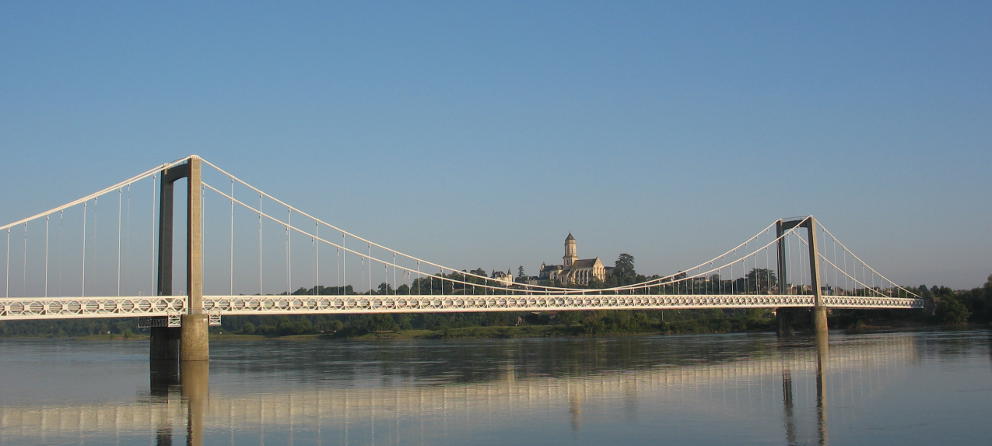
Education in France Ligue pour la Protection des Oiseaux : see LPO. Limousin: An upland region in central western France, bordered by Poitou-Charentes, Centre, Auvergne, Midi-Pyrénées and Aquitaine. Capital Limoges. Limousin is made up of three departments; Corrèze, Creuse and Haute-Vienne. It is the least populated region of continental France, and has been in steady population decline for over a century. It is the French region with the oldest population. However, the population has shown a slight and unexpected rise since the start of the 21st century, due to an influx of British and Dutch residents, attracted by the area's low population density and low house prices. See Limousin region . Lip - Iconic French watch manufacturer, the most spectacular victim of the collapse of the French watch industry in the early 1970s. In 1973, the Lip factory in Besançon became a symbol of worker contestation; employees refused to accept the closure of the plant, and took it over in an act of defiance. Watch production continued for several weeks, until the plant was stormed by riot police. 100,000 people gathered in Besançon on 29th September, in support of the workers, but eventually the plant was closed down and sold to businessman Claude Neuschwander. Production started up again, but the company was unable to compete against cheap eastern imports, and went into liquidation in 1976. Later, the brand name was bought, and Lip watches are again produced - but mostly in China. A few are produced in France, but not in Besançon. Livret A - The standard and popular basic savings account, previously offered only by the French post office savings bank (Les CCP, comptes chèques postaux), but now available from most banks. There is a limit on the amount that a person can place in a Livret A account (in 2008 this is 15,300 €uros), the rate of interst is medium to poor (4% in 2008), but interest is tax free. Livret jeune: Savings account for young people LMD - Licence, Maîtrise, Doctorat. The name of the degree structure adopted since the start of the 21st century by French universities, in accordance with the European "Bologna" system. At one stage called the 3-5-8 system, on account of the number of years of higher education required to achieve the various degree qualifications. Loi 1901, see Association loi 1901 Loire, La : (Photo top of page ) The longest river in France, and the longest surviving "natural" river in western Europe. Length 1020 km. Rising at over 1300 metres in the Cévennes mountains in the department of Ardèche, the Loire flows north as far as Orleans, then westwards to its mouth at Saint Nazaire, on the Atlantic coast just south of Brittany. The Loire is considered a "natural" river, on account of the few human-built restrictions to its natural flow, which varies considerably from season to season. For much of its lower reaches, the Loire is bordered by stone and earth levées, built in the 17th century, and imitated later on the other side of the Atlantic in Louisiana, beside the great Mississippi. Salmon once thrived in this river and its tributary the Allier; they are currently being reintroduced. Once a major waterway, the Loire is only properly navigable today as far as the city of Angers. "La Loire" is also the name of a French department, number 42, capital St. Etienne. Photo top of page. Loire wines. Although there are some excellent wines produced in the large Loire Valley area, there are few Loire wines, whites, rosés or pale reds, that rank among the greatest French wines. "Anjou Rosé" is a good everyday rosé, and "Muscadet" and "Gros Plant" from near the mouth of the Loire are dry white wines that go excellently with seafood. See wine guide for further details.. Longchamp, Hippodrome de : The main Paris racecourse (horse racing). Loréal : see L'Oréal Lorient, Festival Interceltique de : Celtic music and dance festival held each year in the Breton port of Lorient.. Lorraine :French region located in north east France, bordering Belgium, Luxembourg, Germany, Champagne-Ardenne, Alsace, and Franche Comté. The administrative capital of Lorraine is Metz; but the urban area of Nancy is the region's largest connurbation. Lorraine was formerly a major industrial region, with large steelworks in the Moselle valley, and along the German border in the area of Forbach. The region is made up of four departments, Meurthe-et-Moselle, Meuse, Moselle and Vosges . Like their neighbours in Alsace, the people of the north of the region, along the German border, have a regional language of Germanic origin. Moselle Franconian is closely related to the Luxembourgish Franconian spoken in Luxembourg. For further information see Lorraine regional guide. Louvre, Palais du : The principal museum in Paris, formerly a royal palace, housing one of the world's greatest art collections. The museum is normally open six days a week, but closed on Tuesdays. Entry is free on the first Sunday of each month. The Louvre contains works by virtually all the world’s great masters, as well as a large collection of historic artefacts from all continents and all ages. The most famous item in the Louvre is the Mona Lisa, painted by Leonardo da Vinci, and known in French as La Joconde. Louvre group : formerly called Envergure, the Louvre group is the second largest hotel company in France, owning in particular the Campanile, Kyriad and Première classe chains. See also Accor. In March 2015, the Louvre group was taken over by a chinese hospitality company Jin Jiang International. LPO : Ligue pour la Protection des Oiseaux - French national federation of ornithologists, founded in 1912, and the French equivalent of Britain's RSPB. It has 40,000 members, which is small by international standards. The LPO is a pressure group for the defence of birds and their environment. Lutte Ouvrière : L.O, Trotskyist political party. See also Laguiller, Arlette (above). LVMH : Louis Vuitton – Moët Hennesy. A large holding company specialising in luxury products, LVMH is the main or unique shareholder in a range of products including perfume, jewelery, designer clothes, fine foods, drinks and champagne. Among the group’s most high profile companies or brands are Christian Dior, several top brands of champagne, including Moët & Chandon, Mercier and Krug, Tag Heuer watches, and Guerlain perfumes and cosmetics. It also owns the Sephora chain of beauty products retail outlets.LVMH is a CAC 40 company. Lycée: French high school, covering the last three years of secondary education (grades 10 to 12). Important lycées also offer post-baccalaureate classes for selected students. Lycées prepare students to take the Baccalauréat, for subsequent entry into higher education; some lycées also include post-baccalaureate levels preparing students for entry into Grandes Ecoles. For more details see article on secondary education in France Lycée Professionnel: (also known as LP, formerly LEP): high-school preparing students for entry into specialised trades. Students in Lycées Professionnels work to obtain diplomas in their particular specialisation. The basic diploma is the CAP (Certificat d'aptitude professionnel), the standard qualification for entry into a number of crafts or trades. Alternatively they work beyond the CAP for a BEP (Brevet d'études professionnelles) which can lead on to the a Baccalauréat professionnel, giving access to higher education. Lycées Professionnels are specialised in a particular field, for example Lycée hôtelier, Lycée du bâtiment, Lycée du bois. Some are in the state sector, others are private establishments. Lyon (in English, Lyons) : the second city in France, located at the confluence of the rivers Rhône and Saône, about 130 kilometres south west of Geneva. Population: metropolitan area 1.8 million inhabitants – greater Lyon urban area 3 million. Lyon, the capital of the Rhone department, and the Rhone-Alps region, is particularly important as a communications centre, and for its chemical and pharmaceutical industries. Part of the old city of Lyon is classed as a UNESCO world heritage site. Lyon, Gare de. The most important Parisian railway terminus, the Gare de Lyon is the departure point for trains serving the whole of south eastern France, a segment stretching from Mulhouse to Perpignan, as well as Switzerland and Italy. It is the Paris terminus of the original and most important TGV route, the TGV Sud Est. The main building and the great glass vault were built in 1900, to mark the great French Universal Exhibition of that year. Lyonnaise des Eaux : One of France's big water distribution companies, now part of the Suez group, in turn part of GDF-Suez. Photo top of page: the river LoireSomething missing? If you
cannot find a word,
phrase or name that you believe we ought to have included in this
Dictionary of France, please contact About-France.com. Dictionary
editors will consider your request, and if appropriate include a
definition of the missing term at the next update.
To contact
this website, use our get
in touch form
|
| ►► Site guide |
| About-France.com home |
| Online French grammar |
| Full site index |
| About-France.com site search |
| ►► Principal chapters on About-France.com : |
| Guide
to the
regions of France Beyond
Paris, a guide to the French regions and their tourist attractions.
|
| Guide
to Paris Make
the most of your trip to Paris; Information on attractions,
Paris
hotels, transport, and lots more.
|
| French
life and
institutions
A mine of information about
life and living in France, including
working in France, living in France, wine,
food and eating,
education,
shopping.
|
| Accommodation in France |
| Planning
a trip to France
Information
on things to do before starting your trip to France.
|
| Driving
in France
Tips
and useful information on driving in and through France - motorways,
tolls, where to stay....
|
| Maps
of France
Cities,
towns, departments, regions, climate, wine areas and other themes.
|
| Tourism in
France
The main tourist
attractions
and places to visit in France - historic monuments, art galleries,
seasides, and more
|
| A-Z
dictionary of France Encyclopedic
dictionary of modern France - key figures, institutions, acronyms,
culture, icons, etc.
|