
The conoisseur's guide to France
| ►► Site guide |
| About-France.com - home |
| Full site index |
| Search About-France.com Find information by keyword |
| France in
Brief |
| ►► Principal chapters on About-France.com : |
| The
regions of France Beyond
Paris, a guide to the French regions and their tourist attractions.
|
| Guide
to Paris Make
the most of your trip to Paris; Information on attractions, Paris
hotels, transport, and lots more.
|
| Tourism in France
The
main tourist attractions and places to visit in France - historic
monuments, art galleries, seasides, and more
|
| Planning
a trip
Information
on things to do before starting your trip to France..
|
| Driving in France
Tips
and useful information on driving in and through France - motorways,
tolls, where to stay....
|
| Accommodation in France |
| Maps of France
Cities,
towns, departments, regions, climate, wine areas and other themes.
|
| The French way of life
A mine of information about
life and living in France, including
working in France, living in France, food and eating, education,
shopping.
|
| A-Z
dictionary of France Encyclopedic
dictionary of modern France - key figures, institutions, acronyms,
culture, icons, etc.
|
| ►► Other key pages : |
| Climate and weather
What
weather to expect in different regions of France
|
| Regional map of France |
| Essential facts and figures |
| Doctors and emergencies |
| Skiing & ski areas in France |
| School holiday calendars |
| Essential French for visitors |
| Holiday planner |
| ►► Other main travel pages |
| Routes
south from Calais
Routes
and maps for driving south avoiding the heavy traffic round Paris.
|
| French rail travel |
| Keeping safe in France |
| Ferries & Channel tunnel to France |
| Flights to France |

The French presidential election 2007
Sego or Sarko? Whoever is in charge of France by the middle of the year, one thing is more or less sure – France will be moving into a period of change. It is something that both front runners for the coming Presidential Election agree on, in their own ways.
France
– for all its joie de vivre
- is a country in crisis. Even if the great curse of unemployment is
slowly beginning to subside, the country remains plagued with a raft of
other ills; social crises, a staggering national debt, a vast and
inefficient civil service, the highest tax burden of any major country,
and a general feeling of disillusion with the political elites who have
run the country for the last half century.
Just
before Christmas, one of the nations iconic figure’s
– ageing rocker
Johnny Halliday, the French equivalent of Elvis – announced
that he was
leaving the country to live as a tax exile in the
millionaire’s resort
of Gstaad, in Switzerland. Almost all French politicians –
classically
out of sync with the mood of the people – condemned
Johnny
for
his lack of patriotism – as if it were somehow patriotic of
Johnny to
give 60% of his earnings to the state in taxes; but among
Johnny’s
millions of fans, there was a clear feeling of sympathy for their idol.
But Halliday’s move, coming as
it did
five months
before the forthcoming Presidential and general elections, clearly put
the spotlight on a problem; and there was one leading politician who
–
while carefully avoiding any public approval of Johnny’s
self-imposed
exile – had the honesty to admit that Johnny’s
action illustrated "a
real problem" for France. That
politician was Nicolas
Sarkozy.
He dared to admit what the media have been noting for years, namely
that the country's punitive tax system is damaging France, by
sending into voluntary exile a long line of the
nation’s most
successful sons and daughters – be they musicians, sportsmen
and women,
academics or successful businessmen.
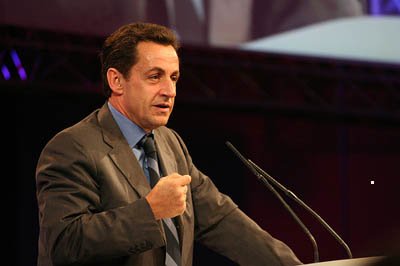 Sarkozy, currently France’s interior minister, is
the front runner among the candidates vying to succeed Jacques Chirac
as the nation’s next president. After months of wrangling in
the ruling
conservative party, the UMP, Sarkozy seems to have now seen off the
last feeble challenge from the defence minister Michèle
Alliot Marie,
and gathered behind him virtually the whole of the Gaullist
party
and their partners; and as such, he now has a clear road in front of
him, which should take him to the second round of the
presidential elections and then, as he hopes, to victory.
Sarkozy, currently France’s interior minister, is
the front runner among the candidates vying to succeed Jacques Chirac
as the nation’s next president. After months of wrangling in
the ruling
conservative party, the UMP, Sarkozy seems to have now seen off the
last feeble challenge from the defence minister Michèle
Alliot Marie,
and gathered behind him virtually the whole of the Gaullist
party
and their partners; and as such, he now has a clear road in front of
him, which should take him to the second round of the
presidential elections and then, as he hopes, to victory.
Campaigning under the slogan “la rupture tranquille”
– meaning a tranquil force for change – Sarkozy, if
he is elected, will
certainly be different from any other French president. Unlike the
classically “gallic” men who have led the country
up to now, Sarko – as
he is popularly known – is the son of a Hungarian immigrant;
and as
such he has not just the rounder vision of someone brought up in the
cross-cultural environment of a first-generation French family, but
also a determination to succeed that is stronger than most of his
compatriots.
As interior minister,
“France’s
chief cop”, he has been tough, supportive of the police and
unambiguous
in his condemnation of the culture of lawlessness in some of
France’s
suburban ghettoes. Sometimes choosing vocabulary well outside the
classical platitudes of apologetic politicians, he has offended
political correctness and even some of his own party, by referring to
crack-taking and lawless teens as “riff-rClick here for French Presidential
Election 2017
aff”
(racaille), and calling
for strong measures to clean up the suburban ghettoes. But his words
have gone down well among the France’s ordinary law-abiding
suburban
middle classes, exasperated by what they see as a surge in delinquency
and the breakdown of the traditional way of life.
As for France’s huge economic problems, Sarkozy is
one of the
first to admit that there are real big problems, and that tackling them
will mean a dose of hardship and rigour. He is determined to slim down
the civil service, to continue the fiscal reforms that the present
government has already begun in a timid fashion, and to make France
once again a country in which success and innovation are rewarded
instead of being discouraged by the arcane and punitive tax system that
has sent Johnny Halliday and thousands more into tax exile in
Switzerland, the USA, the UK and other countries. He has pledged to
change income tax, inheritance tax, business taxes and wealth tax, and
make France attractive once again; it is something that France
desperately needs if it is to avoid even worse economic problems in the
decades to come.
But is it something that
Sarkozy can achieve? His supporters certainly think he can, but then
there are a lot of people in France who do not share the Sarkozy vision
of a new “liberal” France; it is therefore certain
that even if this
tough-talker does make it to the Elysée Palace, there are
going to be a
lot of obstacles in his path. General de Gaulle one said that France
was ungovernable; Sarko may find out, to his cost, that this is another
of the General’s quips that has more than a grain of truth to
it.
Of course, Sarkozy may not win. If it
had just been
a matter of running off against a lacklustre
“elephant” of the old
socialist party, the result of the upcoming election would seem to be a
foregone conclusion. But that is not the case; instead of adopting one
of their old-style heavyweights from the past, France’s
socialists, led
by a swell of grass-roots opinion, have broken with tradition and
selected a woman, Segolène
Royal,
to carry their colours in the impending election. And in many respects,
they have actually chosen their own centre-left version of Sarko.
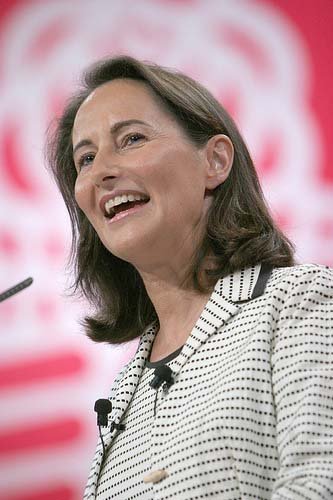 Like Sarko, “Sego” is one who has not
been afraid to call a
spade
a spade, and is also campaigning on a platform of “strong change.”
She has been endorsed by all the tenors of the Socialist Party and
their main allies, and has even won the support of Jean-Pierre
Chevènement, leader of the very old-Labour style faction
that broke
away from the Socialist party a decade ago. Defying traditional opinion
in the Socialist party, Segolène Royal even went on record
as
expressing her admiration for Tony Blair and the way he had
reformed
Labour and helped Britain get back on the rails again. For most on the
French left, Blair is seen as a dangerous “liberal”
whose main
achievements have been to destroy traditional socialism in
Britain, and serve as George Bush’s poodle.
Like Sarko, “Sego” is one who has not
been afraid to call a
spade
a spade, and is also campaigning on a platform of “strong change.”
She has been endorsed by all the tenors of the Socialist Party and
their main allies, and has even won the support of Jean-Pierre
Chevènement, leader of the very old-Labour style faction
that broke
away from the Socialist party a decade ago. Defying traditional opinion
in the Socialist party, Segolène Royal even went on record
as
expressing her admiration for Tony Blair and the way he had
reformed
Labour and helped Britain get back on the rails again. For most on the
French left, Blair is seen as a dangerous “liberal”
whose main
achievements have been to destroy traditional socialism in
Britain, and serve as George Bush’s poodle.
Segolene Royal is currently riding high in the
polls;
elegant, refined and smiling, she, like Sarkozy, has captivated a large
proportion of French voters, who see her as a visible image of change,
a far cry from the demagogic “politicians” of the
classic French left.
In the primary elections organised for the first time by the Socialist
party to choose their flag-bearer for the presidential elections, she
roundly saw off all competition, achieving a clear absolute majority of
votes from the party members.
Just as Sarkozy has pledged to change the way France is run,
Segolène Royal freely admits that there are a lot of things
in France,
including its bureaucracy and its tax system, that need to change; yet
she has refrained from advocating the type of radical reforms that
Sarkozy envisages. On the key issue of the 35-hour working week,
imposed by the Socialists when they were last in power, but now seen by
many as the main reason for France's economic plight,
Segolène has
hedged - admitting that all is not well, but failing to take a clear
stance. To do so would inevitably alienate her from a certain part of
socialist opinion, as the party is very divided on the issue. Likewise,
any clear commitments to specific social or economic
reforms might
alienate some of the traditional French socialist voters, who benefit
strongly from France’s generous social services. Furthermore,
if she is
elected, she will logically have to rely on a parliament in which the
traditional socialists from the past will still carry a lot of
weight. Even if, in the past, France’s socialists have been
just as
successful at enacting reforms as the conservatives have been, it can
not be taken for granted that President Royal, if she is elected, will
be able to enact as much change in France as she would hope to. That
remains to be seen; it will perhaps depend, if she becomes
France’s
first woman President, on the balance of forces in the Socialist party
between the traditionalists, well represented among parliamentarians,
and the grass-roots that chose her as their candidate.
In the meantime, the presidential battle will gather pace,
and
“change” will be the main argument. From May
onwards, it will be up to
Sarko or Sego, assuming that it is one of them who succeeds Jacques
Chirac, to begin tackling France’s huge problems, and
enacting the
changes that the country cannot afford to delay much longer. Time will
tell how great those changes will be; but one way or another, 2007 will
be a year of change. That much is certain.
First
published in 2006 - © About-France.com
- Alexia Granville
Photos:
Photo of N.. Sarkozy by Edublogger - E
McIntosh . Photo of Segolene Royal by
Parti Socialiste.- Photos licenced
under the Creative
Commons licence - some rights reserved.