
Le Mans
Much more than just a racetrack
- Explore France ►
- Key pages
- Where to go
- How to get there
- More about France
Le Mans - the city in the middle of France
| On this page | Location and access | Sites and attractions |
| In the area | Hotels in le Mans ► |
Le Mans: a historic city, not just a racetrack
A Short History of Le Mans
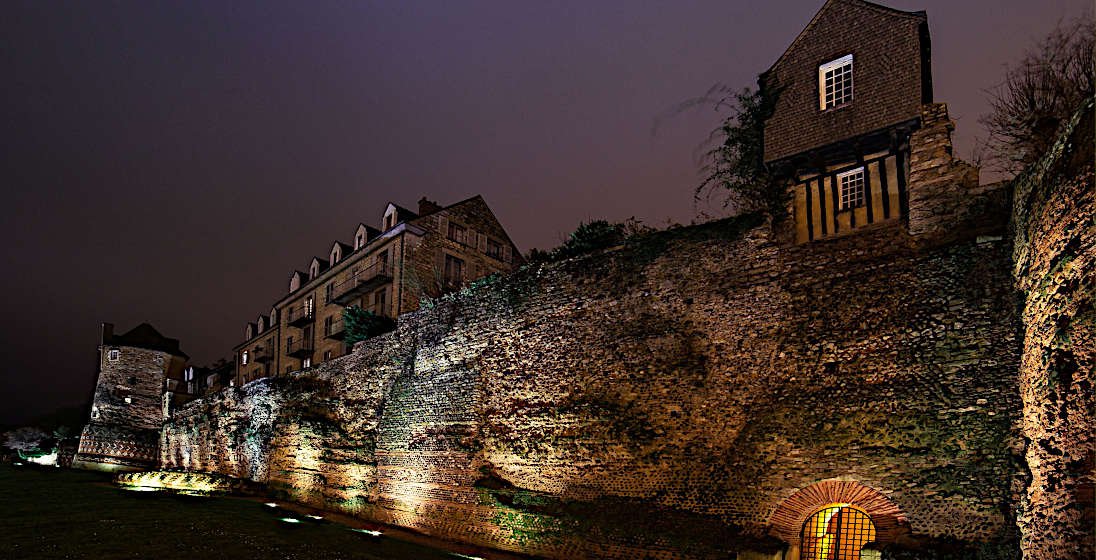
Le Mans was founded in Roman times as Vindinum, capital of the Cenomani tribe. The city flourished under Roman rule, and substantial sections of the uniquely decorative late Roman walls still encircle the old town. During the Middle Ages, Le Mans became an important religious and political centre, closely linked to the history of the Counts of Maine and, later, the Plantagenet dynasty. Over the centuries, bishops, nobles, and merchants shaped the city, leaving behind a rich architectural legacy that survives almost intact within the historic quarter.
The Heart of Le Mans: Cité Plantagenêt
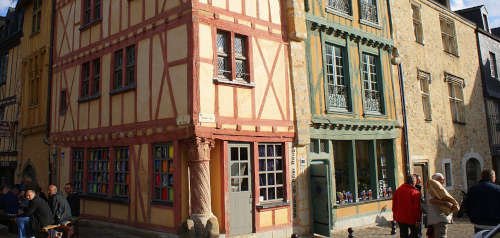
The historic centre of Le Mans, known as the Cité Plantagenêt, is one of the finest preserved medieval quarters in France. This urban ensemble of cobbled streets, narrow alleys, historic squares, and half-timbered houses, has often served as a location for historic films. Rising above the old town is the Cathédrale Saint-Julien, whose Romanesque nave and soaring Gothic choir reflect centuries of architectural evolution. Exploring this quarter on foot is the best way to appreciate the city’s layered history and tranquil atmosphere.
Le Mans and its heritage
Le Mans places strong emphasis on preserving and showcasing its historic identity. The Musée de Tessé is renowned for its collection of ancient Egyptian antiquities, and also has a representative collection of paintings including works by Pietro Lorenzetti, Philippe de Champaigne, Boucher, Constable, Ingres, Corot and other masters. Cultural events often take place within historic settings, particularly in the old town, where summer evenings bring concerts, exhibitions, and open-air performances. A highlight is the “Nuit des Chimères”, in early July, when light projections transform the medieval streets and monuments into a living canvas, offering a son et lumière interpretation of the city’s heritage.
Sites and monuments in Le Mans
- Cathédrale Saint-Julien: A striking cathedral combining Romanesque and Gothic architecture, with fine stained glass and commanding views over the Sarthe valley.
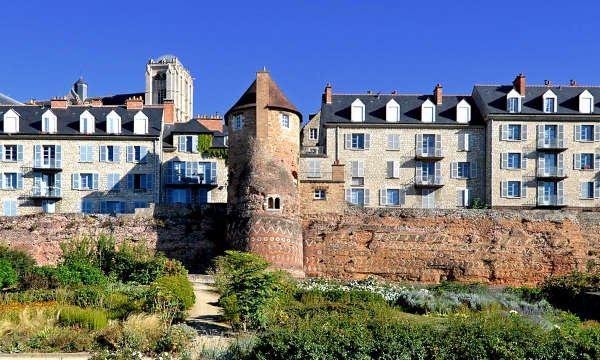
- Roman Walls: Exceptionally well preserved late Roman ramparts, decorated with geometric patterns of brick and stone.
- Cité Plantagenêt: The medieval old town, with its half-timbered houses, cobbled streets, and historic mansions.
- Musée de Tessé: Fine art, archaeology, and an unexpected Egyptian collection housed in a 19th-century building.
-
Old Town Mansions: Renaissance and medieval houses such as the Maison de la Reine Bérengère, reflecting the city’s noble past.

The Le Mans circuit attracts enthusiasts from round the world
- Le Mans race circuit - located just outside the city, this is home to the Le Mans 24-hour race, which takes place each year in June - and to other motor sport events. Most of the circuit follows public roads, which are open as normal roads unless races are taking place. But be warned, when not being used for races, these roads, including the legendary Mulsanne Straight, have normal speed limits, as well as speed cameras.
In the area of Le Mans
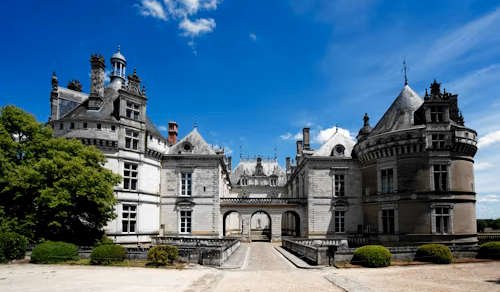
The Château du Lude, one of the most elegant castles in the Sarthe
- Château du Lude (45 km): A magnificent castle combining medieval foundations with Renaissance and classical façades.
- Sablé-sur-Sarthe (45 km): A small historic town on the river, known for its château and fine church.
- Abbaye de l’Épau (5 km): A beautifully preserved 13th-century Cistercian abbey founded by Queen Bérengère of Navarre.
- Alpes Mancelles (40 km): A picturesque landscape of hills, rivers, and villages, ideal for walking and cycling.
- La Flèche (45 km): A historic town with a fine Jesuit college and one of the five major zoos/wildlife parks in France.
The Roman city walls of le Mans, by night
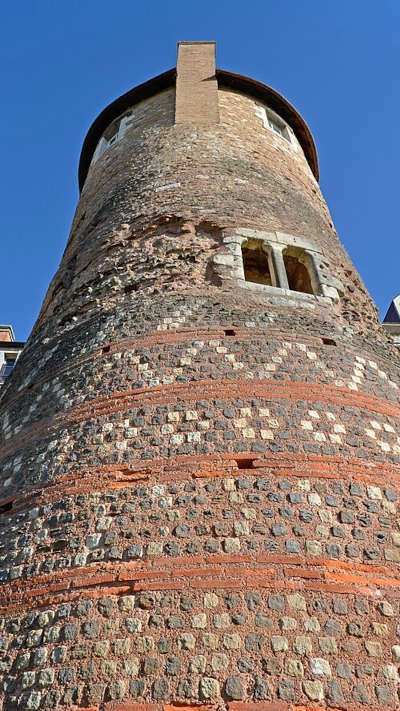
Decorative Roman brickwork
- By train:
Le Mans is very well served by rail (find tickets on Trainline). There are frequent direct hight-speed TGV trains from Paris Montparnasse, taking about 55 minutes, as well as slower TER trains. Le Mans can also be reached directly by train from Nantes, Rennes, Angers, Tours, and Laval. - By road:
Le Mans is easily accessible by car via the A11 autoroute (Paris – Le Mans – Angers – Nantes). The drive from Paris takes around 2 hours. The city has numerous public car parks, including facilities close to the historic centre and the railway station. - By bike:
Le Mans lies on several long-distance cycling routes. It is accessible via the Vélobuissonnière (V44), which links Normandy to the Loire Valley, and connects with routes along the Sarthe valley, offering scenic cycling through countryside and small towns. - By air:
The nearest major international airports are the Paris airports (Charles de Gaulle, or Orly). The smaller regional airports of Tours and Rennes, are nearer, but have few international connections..
Le Mans has an urban tram systelm, linking the rail station, the historic centre and beyond.
Region: Pays de la Loire
Nearby cities: Tours, Caen, Angers
Nearest airports:Paris
Population: 210,000
Main sites: The old town (cité Plantagenêt), the medieval cathedral, the Roman walls, the motor-racing circuit
Nearby attractions and sites: The Loire valley.
Where to stay in Le Mans
The About-France.com selection
from Booking.com
Hotel Leprince, Best Western Premier Collection
Hotel with parking, EV charging point, spa, on the edge of the historic city. Restaurants close by.
Hotel Concordia
Classic hotel with restaurant, parking, EV charging point, close to historic centre.
Three star hotels: ★★★
Recommended ...
B&B Hotel - Le Mans Centre (formerly Ibis)
Centrally located three-star hotel, beside the river. Private parking, choice of restaurants close by.
Maison des Ecrivains guest house
Recently renovated guest house in historic building close to Cathedral. Parking, restaurant, garden, outdoor seating area.
Logis Saint-Flaceau
Small private hotel with apartments & room, in 16th century building. Historic centre, garden, restaurants close by.
Other three-star hotels in and around Le Mans
Click here for other three star hotels
Two star hotels: ★★
Recommended ...
Ibis Budget hotel - two star hotel close to the old town. Street parking only. Restaurants close by.
More two-star hotels
Click here for a full list of two star hotels in Le Mans
Apartments / BnBs
Follow this link for B&Bs and short-stay apartments in Le Mans
As an affiliate, About-France may receive a small commission on hotel bookings made through Booking.com; this does not affect the price charged.
low-cost car hire in France
Copyright texts © About-France.com
Photo top of page: Creative Commons 4.0 licenced photo by FrantzJRF
Old houses: Creative Commons 3.0 photo by Carsten Wiehe
Roman brickwork: Creative Commons 3.0 photo by Sellbymay