French bread - a guide
Baguettes, croissants and other delights
About-France.com
- the connoisseur's guide to France
- Explore France ►
- Essential pages
- Travel in France
- Where to go
- What to see and do
A guide to the different types of French bread
When
it comes to bread, there are few things that can match the
taste and savour of a fresh French baguette; but the
iconic French baguette if by no means the only type of bread
eaten in France. On the contrary, French bakers now produce an inspired
selection of different types of white bread and darker varieties, made
with a range of different flours
 The
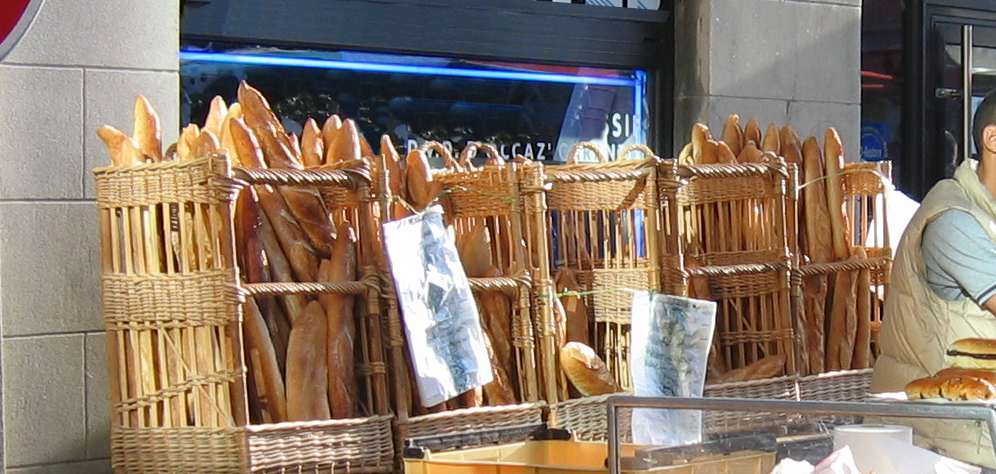
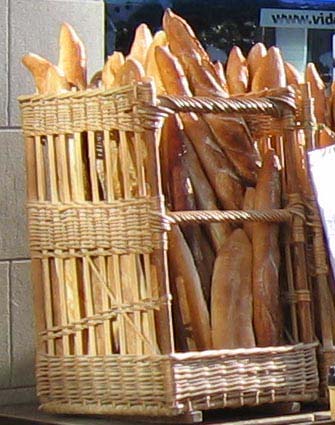
"French stick", the long thin crusty loaf, is perhaps one of
the better known icons of French life. In France, it is known as a "baguette"
– which
litterally means "a stick" – and it is indeed the most
popular type of
bread in France, notably in towns and cities. The standard baguette
weighs 250 grams (about half a pound); it comes in three slightly
different forms; the ordinary baguette - with its crisp golden-brown
crust; the "moulded baguette" (baguette
moulée), which is often a baguette manufactured
by an
industrial bread-oven, and can be recognised by the fine lattice
pattern on all the underside; and finally a floured baguette, or baguette farinée,
which is paler in colour, as the crust is covered with flour before
cooking. From any given bakery, the three types will be very similar -
the crust often being thinner on the moulded baguette than on the other
two.
The
"French stick", the long thin crusty loaf, is perhaps one of
the better known icons of French life. In France, it is known as a "baguette"
– which
litterally means "a stick" – and it is indeed the most
popular type of
bread in France, notably in towns and cities. The standard baguette
weighs 250 grams (about half a pound); it comes in three slightly
different forms; the ordinary baguette - with its crisp golden-brown
crust; the "moulded baguette" (baguette
moulée), which is often a baguette manufactured
by an
industrial bread-oven, and can be recognised by the fine lattice
pattern on all the underside; and finally a floured baguette, or baguette farinée,
which is paler in colour, as the crust is covered with flour before
cooking. From any given bakery, the three types will be very similar -
the crust often being thinner on the moulded baguette than on the other
two. But of course la baguette is by no
means the only type of bread in France. Au contraire...
But of course la baguette is by no
means the only type of bread in France. Au contraire...In addition to baguettes, France has a wonderful range of delicious breads to offer. Ordinary French white bread comes in several other shapes and sizes, from the couronne (bread in the shape of a ring), via the flute (twice the size of a baguette) to the batard (a half-length normal loaf) and the ficelle, a long and very thin loaf. Ficelles must be eaten fresh, as they are so thin that the inside dries out rather fast once they have been baked.
Another traditional type of French bread is "country bread", pain de campagne, white bread made in a slightly different way to ordinary bread and often incorporating some whole wheat flour or some rye flour, so that it keeps longer; pain de campagne often has a thick crust, which helps the bread to keep.
Apart from these basic types of bread, France's bakeries also sell a whole range of other types of bread, including wholemeal breads (pain complet or pain aux céréales), rye bread (pain de seigle), sourdough bread (pain au levain), and a sweet bread called brioche. Bread resembling the classic English or American sliced white loaf is known as "pain de mie", and is usually available in supermarkets, though rarely on the fresh bread counter.
 These days, most boulangeries also
offer a range of breads spiced up with nuts (pain aux noix)
,
olives, bacon (pain
aux lardons),
cheese and a variety of other natural additives. Many bakers
make bread by their own proven recipes, meaning that even a
baguette will be different from one shop to another; but a sign of the
times has been the development of a number of "brands" such as "Banette", bread made
locally using a specific type of flour, and following a strict
recipe.
These days, most boulangeries also
offer a range of breads spiced up with nuts (pain aux noix)
,
olives, bacon (pain
aux lardons),
cheese and a variety of other natural additives. Many bakers
make bread by their own proven recipes, meaning that even a
baguette will be different from one shop to another; but a sign of the
times has been the development of a number of "brands" such as "Banette", bread made
locally using a specific type of flour, and following a strict
recipe. Most French bakeries also sell a range of patisseries, buns, cakes and other delicacies. The best known of these is the croissant which, when bought in a bakery and not pre-packed in a supermarket, will almost always be "au beurre" - made with butter. Other favourites include pains au chocolat, like croissants with a chocolate filling, and pains aux raisins, with raisins in them, and croissants aux amandes, which are croissants stuffed with a soft almond paste
Bread from supermarkets.
Baguettes from the bread counter of French supermarkets are often quite tasty, and generally need to be eaten as quickly as baker's bread. Many supermarkets use industrial dough which has been deep-frozen before being baked on the premises, and bread counters selling this kind of bread are not allowed, by law, to call themselves "boulangeries". However, with customers paying increasing attention to quality and freshness, most supermarkets now buy in a range of locally produced and baked breads, and some even make and bake their bread on the premises, like "artisan" boulangeries do.Slice your own bread
Most supermarkets and the majority of small bakers are nowadays equipped with bread-slicing machines, meaning that customers who want the thicker loaves of bread, such as pain au levain or pain de seigle, can use the self-service machines in supermarkets or ask to have their bread sliced in bakeries. This is not usually done with baguettes.Opening hours
Tourists travelling through France, who want to stop and buy Fresh bread for a picnic, should bear in mind that many small shops close for up to two hours in the middle of the day. Boulangeries often stay open beyond the traditional midday closing hour, but after 12.30 you may well find a locked door if you stop off at a village bakery. Be warned.Click
for more about food and eating in France
Copyright notice: Website and text © About-France.com 2007 - 2023 except where otherwise indicated.
About-France.com
Home
page - Site search
- Regions
- Maps of France
►► More pages on French life
About-France.com
is an independent user-supported website that does not track visitors
and carries very little advertising, Affiliate links
to relevant
partner websites may generate commission on sales at no cost
to the
user.