
About-France.com
The
connoisseur's guide to France
Since 2003
- Explore France ►
- KEY PAGES
- Where to go
- How to get there
- More about France
Site search
About-France.com
What are you looking for ?
What are you looking for ?
►
COVID
- There are no current visitor restrictions. For details see Covid in France
About-France.com
"inspirational and practical"

Best websites for holidays in France
Mail online travel guide
"inspirational and practical"
Winner
Best websites for holidays in France
Mail online travel guide
RELIABLE PRACTICAL INFORMATION about France
This website does not use AI and does not carry covert advertising.For over twenty years About-France.com has been a popular source of reliable and well-researched information about France. At a time when the Internet is littered with trite ill-informed click-bait travel blogs, AI generated and unchecked information, and advertorials, About-France.com takes pride in its honest guides, informed content and accurate information – original content written by experts with a detailed knowledge of France.
More than just an online travel guide, About-France.com is a website filled with hundreds of pages of original relevant and useful information about France. The practical travel and tourist information pages on Paris, French regions, driving in France, and a whole lot more, are just part of a much wider exploration of modern France.
Other pages of this website cover a wide range of topics of interest to students and anyone wanting to understand French life, culture and traditions, but also the nation's institutions and the French language.
►
Travel
& tourist information :
Choose a theme ► Paris
► French
cities ► Regions
► The best
of France
► Heritage cities
► Tourism in France
►
Shopping ► Accommodation
► Planning
a trip
► Driving
► Train travel
► Ferries
► Fly to FranceFrance – so much more than just the world's leading tourist destination
► Since 2003 -
An original inside guide to France
– Discover France with the experts, writers with an intimate
knowledge
of
France, and personal experience of life and travel throughout the
country
► France as a tourist destination
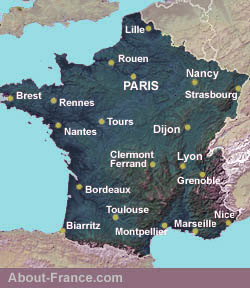
In spite of everything, France remains the world's number one tourist destination, and by and large it remains one of the safer places in the world to visit. it's not hard to understand why. France has it all - or more or less. It has tourist sights for all tastes; it has some of the greatest beaches in Europe, as well as the highest mountains and the finest historic monuments, the most beautiful cities, the most idyllic countryside, the most magnificent castles, the finest rivers, and plenty more, not to mention some of the best restaurants and the finest wines and more hotels than any other country in Europe.
Mont Saint Michel, Normandy
Paris
 Paris
is just the icing on the cake - the French capital city and surely the
most
interesting city in the world. With its museums and monuments, its fine
boulevards and its river Seine, its culture, its restaurants and its
unique atmosphere, Paris is a city that you can visit for a week
or a month or a year, and never tire of. In the memorable words of
Thomas Jefferson, "A walk about Paris will provide lessons in history,
beauty, and in the point of life." And much more too. But
Paris
is just a starting point. France is much so much more than just Paris.
Paris
is just the icing on the cake - the French capital city and surely the
most
interesting city in the world. With its museums and monuments, its fine
boulevards and its river Seine, its culture, its restaurants and its
unique atmosphere, Paris is a city that you can visit for a week
or a month or a year, and never tire of. In the memorable words of
Thomas Jefferson, "A walk about Paris will provide lessons in history,
beauty, and in the point of life." And much more too. But
Paris
is just a starting point. France is much so much more than just Paris.Cultural tourism in France
French museums and art galleries - which contrary to popular belief are not all located in Paris - offer a magnificent collection of works of art and artefacts; and for those for whom a holiday is an opportunity to discover Europe's historic heritage, France's great cathedrals, medieval castles, and thousands of other ancient monuments are a treasure trove waiting to be discovered. For themed breaks, the châteaux of the Loire (in the Centre region of France) are an obvious choice; among the many other historic sites, consider discovering the Roman remains of Provence , the medieval bastide towns of the southwest, or the castles and caves of the Dordogne. There are even some scenic steam railways for people who enjoy a trip down memory lane. Check out the regional guides for information on sights, monuments and tourist attractions in each area.The French seaside:
In July and August, France's Mediterranean beaches tend to be pretty packed; this is particularly the case in the famous resorts of Provence and the French Riviera. By contrast, the long sandy beaches of the Languedoc offer much more legroom. Away from the resorts, Brittany offers plenty of good beaches, with the added fun of tides and good waves; and France's Atlantic coast, south of the Loire, has plenty of long sandy beaches, in the regions of Poitou-Charentes and Aquitaine. South of Bordeaux, there are mile upon mile of fine beaches. For more information see guide to the French coast.
Need
a place to stay ?
Search for hotels in France
at the best online rates from Booking.com
Search for hotels in France
at the best online rates from Booking.com
Discover the real France:
 If
you want the life, culture and bustle of the big city, go to Paris.
But France is a lot more than Paris. There are plenty of
places in deepest rural
France that are still very
much off the beaten track; and for camping
holidays, gite
holidays, or for those who are content to put up in small rural inns,
several regions in France offer wonderful holiday opportunities away
from it all. Five French departments (counties) that are particularly
worth checking out are the Aveyron (Midi Pyrenees
area of Occitanie), the Haute Loire (part of the Auvergne
area, recommended by Lonely Planet as one of the ten regions
of the world to visit),
the Corrèze (Limousin),
the Jura (Franche
Comté)
and the Vosges (Lorraine):
all these departments include sparsely populated areas, attractive
scenery, and plenty of leisure opportunities - or just some great
places to sit back with a glass of wine, relax, and enjoy the peace and
quiet. One of the best times of year to visit France off the beaten
track is Autumn,
specially in the south of the country.
If
you want the life, culture and bustle of the big city, go to Paris.
But France is a lot more than Paris. There are plenty of
places in deepest rural
France that are still very
much off the beaten track; and for camping
holidays, gite
holidays, or for those who are content to put up in small rural inns,
several regions in France offer wonderful holiday opportunities away
from it all. Five French departments (counties) that are particularly
worth checking out are the Aveyron (Midi Pyrenees
area of Occitanie), the Haute Loire (part of the Auvergne
area, recommended by Lonely Planet as one of the ten regions
of the world to visit),
the Corrèze (Limousin),
the Jura (Franche
Comté)
and the Vosges (Lorraine):
all these departments include sparsely populated areas, attractive
scenery, and plenty of leisure opportunities - or just some great
places to sit back with a glass of wine, relax, and enjoy the peace and
quiet. One of the best times of year to visit France off the beaten
track is Autumn,
specially in the south of the country.Driving in France
France has an extensive network of motorways, and many of them offer relatively relaxed driving conditions, except at peak periods. Off the motorways, driving on France's backroads can be a way to discover motoring as it used to be, a pleasurable experience and a way to discover the country. For more information click for our guide - driving tips and advice. and our checklist of things not to forget before you leave.French culture and institutions
Finally, for those who are looking for deeper information about France, this website contains pages explaining the main French institutions and the functioning of French life, including the education system and French universities , plus pages on the French way of politics, the French economy and the press. There is also a clearly written guide to the main points of French grammar.Site search: click here to search About-France.com
Use the site search function to look for information by keyword, or follow the hyperlinks from page to related page, to discover a wealth of information about France, French life and customs, tourism in France and the ways and life of the most visited country in Europe.
With input from specialists in French and UK universities, About-France.com is a website that applies academic standards in terms of content, accuracy and style.
Website and all pages © Copyright About-France.com 2003 - 2023
Some more
popular pages and info on
About-France.com.
About-France.com.
- Offbeat France - Discover the best unusual and quirky places to see and visit in France
- The best of France - Discover the best of France by theme
- Byroads through France - Journey down to the south of France on small roads
- The best of rural France - Eight countryside areas in France well away from the crowds
- Best heritage cities - A choice of the most interesting cities to visit in Fance - large and small.
- A weekend in France - Ten ideas for a short break in spots that are easy to reach
- Toulouse - a capital city in southwest France
- Ten must-see sights
- A short history of art in France
- The best prehistoric sites in France
- The Ardeche gorge and caverns
- Tourism map of France
- Sites: Transport and industrial museums
- Sites: Châteaux of the Loire
- Sites: Great Cathedrals
- City guide: La Rochelle
- City guide : Poitiers
- Sites : The Gorges du Verdon
- Day trips to France
- Area guide: Gascony
- City guide : Marseilles
- Sites : The Gorges du Tarn
- Areas: the Massif Central uplands
- Destination guide: Saint-Raphaël
- City guide: Strasbourg
- The best restaurants in France - a guide to the guides
- Camping in France
- Wildlife in France
- Wild flowers
- French motorway and main route map
- Beautiful villages in France
- Compare ferry prices to France
- Guide to the Camargue
- Hotels throughout France
- Paris for free !
- Puy du Fou theme park
- Eiffel tower - practical information
About-France.com
is an independent user-supported website that does not track visitors
and carries very little advertising, Affiliate links
to relevant
partner websites may generate commission on sales at no cost
to the
user.

Disneyland Paris... just click

Discover other countries and areas
- About-Britain.com
- Angleterre.org.uk (in French)
- About-Portugal.com)
- About-Quebec.com
- About-Spain.net
- Morocco Guide
- About-Romania with Rolandia