
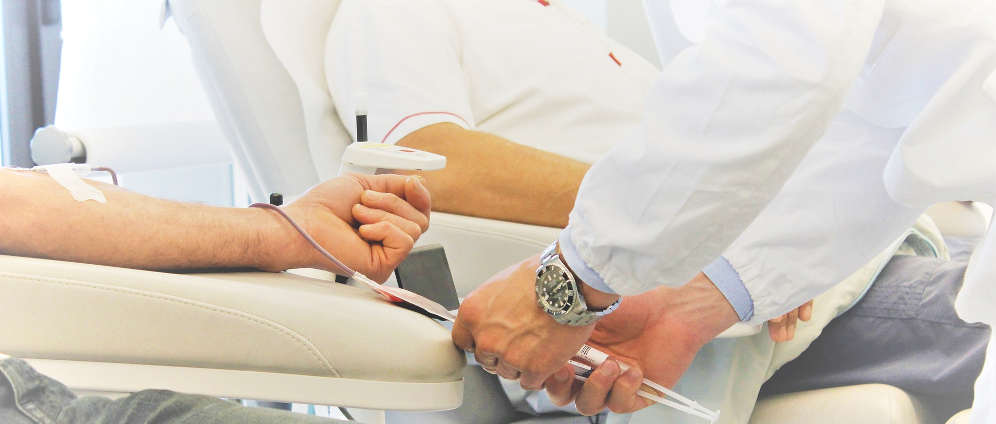
Medical emergencies in France
Accidents and illness in France - how to get help
- Explore France ►
- Essential pages
- Travel in France
- Where to go
- What to see and do
About-France.com
- the connoisseur's guide to France
Sickness,
accidents: what to do in an emergency in
France
| On this page | Emergency numbers | Insurance |
| Finding a doctor | Paying & reclaiming | Essential medical terms with audio |
► ROAD ACCIDENTS: For what to do in the event of a road accident: see Driving in France: accidents
► COVID INFORMATION:
For updates on the Covid situation in France,:
see Covid
information
Emergency telephone numbers:
Emergency
in Paris:
English-speaking pharmacies:
British Pharmacy
62, Avenue des Champs-Elysées
75008 Paris
0143 59 22 52
British-American pharmacy,
1 rue Auber, 75009
0142 65 88 29
SOS-Help
Daily 3 pm - 11pm
01 46 21 46 46
General medical emergency - Paris
Tel 0147 07 77 77
or 36 22
Alternative service
0153 94 94 94
Poisoning
Anti-poison centre
Tel 45 45
24 hr chemist / pharmacies :
a) Paris 3 :
Pharmacie
5 Place de la République
tel 0148 00 18 08
Metro République
b) Paris 8
84, av des Champs-Elysées
tel 0145 62 02 41
Metro George V
c) Paris 9
6, place Clichy
tel 0148 74 65 18 .
Metros: Rome or Blanche
d) Paris 12
Pharmacie Porte de Vincennes
86 Boulevard Soult
Tel 0143 43 13 68
Metro Porte de Vincennes
e) Paris 13 Pharmacie Tolbiac
61 Av. d'Italie
0144 24 19 72
Metro Tolbiac
f) Paris 15
Pharmacie Centrale, 52 rue du Commerce
Tel 0145 79 75 01
Metros Commerce or Emile Zola
15
►►►
Call 15 for medical
emergencies
: this is the national medical emergency number, and will get
you the SAMU service, with an ambulance (Service d'Aide
Médical
d'Urgence - or Medical Emergency Aid Service). Be prepared to indicate
exactly where you are located, and the circumstances of the incident.18
Call 18:
this is the general
emergency number, like 999 in the UK or 911 in the
USA, which will
get you connected to the most appropriate service.Call 112: this is the standard European emergency number. Though be careful, if you are near a land border, for instance in Alsace, a call to 112 from a mobile phone may get directed to the emergency services in the neighbouring country.
For more emergency numbers in Paris, see column right.
(For foreign embassy phone numbers, click here)
Before you travel - health insurance & the EHIC / GHIC cards :
Who qualifies for an EHIC / GHIC card ?
In general terms, EHIC cards are available for people resident in the EU + Switzerland, Norway or Iceland, and enrolled in the national health care system of their country of residence.Careful: there is a lot of incorrect information about this floating round on the Internet. The EHIC / GHIC system does not automatically cover passport-holders of an EU country, but people registered with and contributing to the country's National health service.
For example an Australian citizen who happens to have a UK passport cannot apply for an / GHIC card, nor claim reimbursement on the basis of having a British passport.
Brexit and EHIC / GHIC for UK visitors
Since Brexit, the UK has replaced the European EHIC card with its own GHIC card (suppposedly "Global"). This was not necessary, since the EHIC is not closed to non-EU countries. Switzerland and Norway participate in the scheme, for instance. But the UK government wanted its own card... which is essentially EHIC under a new name, and valid in the same countries (the EU and the other non-EU countries that are in the EHIC system). While one day the GHIC may be "global", for the time being it is just EHIC under another name. For some UK nationals resident in the EU since before 01/01/2021, the UK continues to issue EHIC cards.For all visitors
Health: Visitors from European Union countries are strongly advised to make sure that they have health insurance cover before travelling to France or any other foreign country.The EHIC / GHIC, which is usually issued for up to five years, covers any unplanned medical treatment you may need during your visit to France, as a result of accident or sickness. The card gives access to treatment by doctors, dentists, and in public hospitals, or private clinics operating within the French "sécurité sociale" (health service) framework. Note that the EHIC does not normally cover the full cost of medical treatment in France or other countries; the NHS recommends that all travellers also take out private health insurance, to cover the difference.
Visitors who do not come from EU countries must take out private health insurance cover in order to benefit from France's excellent state health service.
Finding a doctor / hospital / ambulance in France
France has a dense network of medical practitioners, and there are doctor's surgeries (doctor's offices - for Americans) (called "cabinets") even in very small towns. Many doctors operate joint practices, though many have their own private surgeries / offices. To find a doctor, ask any local resident, or find a chemists and enquire. In theory, you can go to the surgery of any GP during opening hours.The number of hospitals in France is falling, as cost-cutting measures are introduced; but it is still possible to find a hospital with some kind of accident or emergency service in most medium-sized towns. Look for signs for "Hôpital" or (why use one word when two are possible!) "Centre hospitalier". In bigger towns or cities, look for signs to the CHR (Centre hospitalier régional) or CHU (centre hospitalier universitaire).
Home visits: if the patient is too sick to move, a doctor will make a home visit. Ask your hotel / campsite / gite owner or neighbour to call a local medic. The cost is slightly higher than a surgery visit; payment and refunding are the same as for a surgery visit.
Sunday and night time calls: in all big towns, and some smaller ones too, doctors and chemists' remain on duty by rota. Local gendarmeries (police stations) can usually provide the phone number of the duty doctor and chemists (médecin de garde, pharmacie de garde); alternatively, ring round local chemists shops until one answers. Doctors are often quite happy to do night calls; often these are done by young doctors, who appreciate the extra payment for coming out at anti-social hours.
Paperwork, formalities:
If you see a doctor, or a hospital, you will be given a signed "feuille de soins" (a statement of the treatment carried out), and possibly an "ordonnance" (a prescription). These must be kept carefully, as you will need to send them in in order to claim reimbursement. You will need to take the "ordonnance" to a chemists, where you will have to pay for the items. If you have an EHIC card, you will be reimbursed later, (see below), and your medicines will probably end up costing you quite a bit less than they would have cost in the UK.The current cost of a standard visit to a GP (general practitioner) in France is 25 € (Spring 2022) . For payment and reimbursement, see below. Visits to specialists and to the hospital cost more, as do home visits and visits at night and weekends.
There is a non-refundable daily hospital board and lodging fee of 18€, called the forfait hospitalier; this is in addition to medical fees. Note that French hospitals do not generally have wards. In-patients are most commonly accommodated in twin rooms, though sometimes rooms with up to four beds. Single rooms can usually be obtained, at an extra cost that may or may not be reimbursed.
Paying, and getting reimbursed:
The standard principle of the French health service is "pay first, reclaim, then get reimbursed"; but for this does not always apply in the event of hospital treatment.- Reimbursement rates: Travellers with an EHIC card will be refunded about 70 per cent of standard doctors' and dentists' fees, and between 35% and 65% of the cost of most prescribed medicines. Dentists frequently charge rates above the standard recognised scale of charges. Some common items such as bandages and comfort medicines are refunded at the lower rate, or not at all.
-
Doctors visits and hospital out-patients
You must pay for treatment and then, using your EHIC card or UK GHIC card, claim a partial refund from the local Health Insurance Office (Caisse Primaire d'Assurance-Maladie or CPAM) in France. Ask the doctor / hospital for the address of the local CPAM office. -
A&E (Urgences) and in-patient treatment
If you are treated in A&E or for other purposes as an in-patient in an approved hospital (state hospital or recognised private clinic) and show yourGHIC or EHIC card, the cost of your stay and treatment (from 80% to 100% in a state hospital) will be paid directly by the local CPAM to the hospital. You will just be billed for the balance, plus if appropriate the fixed daily hospital charge ('forfait journalier'). These are non-refundable under EHIC, which is why it is important to have private health insurance cover as well.
How to claim your refund.
if you have paid the full cost of any medical care, you must keep all the receipts and prescriptions, photocopy them all for safe keeping, then send the originals to the local CPAM with a covering letter, in French or in English. The covering letter should be entitled Demande de remboursement - régime EHIC / GHICTo find the address of the / your local CPAM, go to the French Yellow Pages and key in CPAM in the "Quoi, qui ?" box, and the postcode of the hospital / doctor's surgery in the "Où" box.
Include with your paperwork a copy of your EHIC / GHIC card and also details of the bank account to which you want your refund to be sent. this should include SEPA-compliant information, in the form of your IBAN number and BIC (ask your bank for details if you do not know these).
Don't try to claim back the patient participation share of hospital treatment, if there is one; this is not refundable by the CPAM; but it may be refundable by any private health care cover you may have taken out.
If you do not have a health insurance card, you will need to pay for your health care and contact your private insurance for reimbursement. In the event of hospitalisation, check with your insurer.
Further information: The CPAM of the Haute Vienne department, in the west of France, used to have a useful website in English, giving full details of procedures, rates, costs etc. but this site seems to have been taken down.
Essential medical terms in French with audio :
- to the first four phrases
- Doctor: un médecin [earn med-sanne]
- Where's there a doctor's surgery? Où est-ce qu'on peut trouver un cabinet médical ? [oo eskonn peur trouvay ern cabinay may-dicarl ]
- Call a doctor at once ! Appelez un médecin tout de suite [apple eh ern med-san toot-sweet ]
- Emergency: une urgence [oon oor-jonse]
- to the next four phrases
- Medecine: médicament(s) [may-dee-ca-mon])
- Ill, sick: malade [ma-larde]
- Chemists: une pharmacie [oon farm-assee]
- I'm very sore here / it hurts here: J'ai très mal ici [zhay tray mall eesee]
- to the final expression
- We need to find a doctor urgently. Nous avons besoin de voir un médecin au plus vite. C'est urgent.
About-France.com
Home
page - Site
search
- Regions
- Maps of France
- Contact
About-France.com
is an independent user-supported website that does not track visitors
and carries very little advertising, Affiliate links
to relevant
partner websites may generate commission on sales at no cost
to the
user.
Need
a place to stay ?
Search for hotels in France
at the best online rates
from Booking.com
Search for hotels in France
at the best online rates
from Booking.com


Disneyland Paris... just click
Visiting Great Britain too ?
Check out Emergencies in Britain on About-Britain.com
Website text and photos © copyright About-France.com 2007 - 2025 unless otherwise stated


♥️ Check out
some French
stores that deliver to your country