
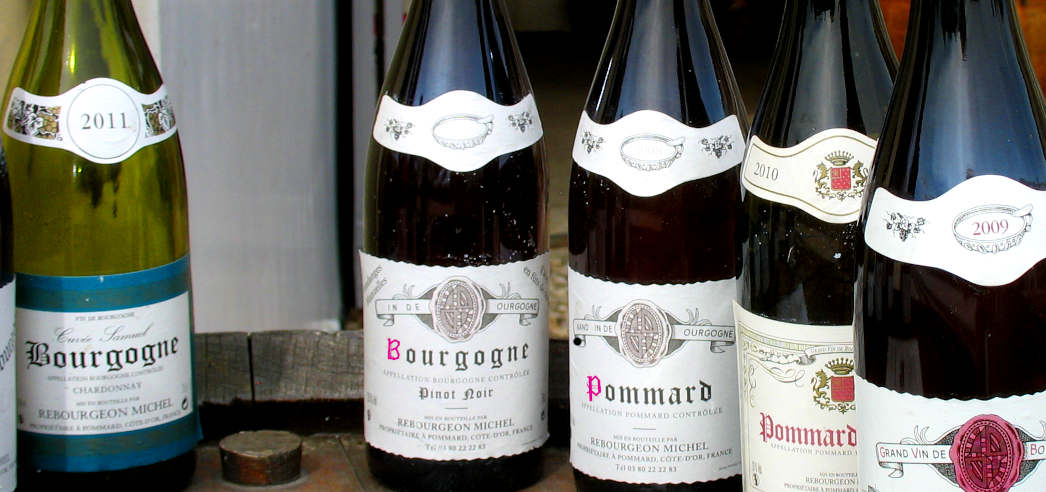
French wine - understand the label
Wine, price and quality
- Explore France ►
- Essential pages
- Travel in France
- Where to go
- What to see and do
Choosing French wine : understanding the label & value for money
 While
you could spend
over 50,000 Euros or 75,000 Dollars on a single bottle of French wine,
there is absolutely no sane reason for doing so. People who spend such
money on 75 centilitres of red liquid are either people with more
money than sense, or investors hoping to fleece people with more money
than sense at a later date.
While
you could spend
over 50,000 Euros or 75,000 Dollars on a single bottle of French wine,
there is absolutely no sane reason for doing so. People who spend such
money on 75 centilitres of red liquid are either people with more
money than sense, or investors hoping to fleece people with more money
than sense at a later date.The record price paid for a standard bottle of French wine was $156,000 for a bottle of 1787 Château Lafitte, sold at Christies in 1985. More recently, an "imperial" bottle (6 litres) of 1947 Cheval Blanc Grand Cru Bordeaux wine broke the world record for a bottle of wine, selling at over $ 304,000.
Yet for those with their feet on the ground, an expensive French wine will be one that in France sells for over 30 € a bottle; a bottle of cheap wine can be had for little over 1 €uro. Between the two lie the rest. The paragraphs below are designed to help ordinary wine lovers understand the complexities of French wine labelling, and obtain the best value for money.
Understanding the label - Value for money - The regions
UNDERSTANDING WINE LABELS
Appellation contrôlée / Appellation d'Origine Protégée (AOC / AOP) The European AOP classification is in the process of largely replacing the old French AOC classification, following a European ruling in 2009. "Appellation" wines represent about 50% of the total Franch wine production. The terms are most frequently used in the classification of wines, but more recently has been extended to act as a label of quality and authenticity for certain regional and local specialities, including cheeses. On the label of a wine bottle, the words Appellation contrôlée or Appellation protégée generally indicate that the wine is of good quality, and always show that it has come from a specific region. However, wines that come with the Appellation label can be of very varying quality, depending on the appellation. At the lower end of the scale come the large regional appellations, such as Bordeaux, Bourgogne or Côtes du Rhône.
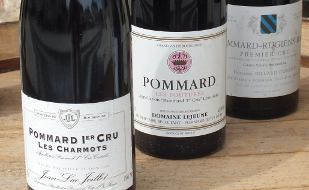
Selection of top quality Burgundies, from Pommard, a "grand cru" area in the Côtes de Beaune vineyard area.
Within
each main region however there are other more specific and
higher quality appellations, from smaller areas, such as Médoc,
or, Côte Rôtie, or Côtes de Beaune.
Within these
smaller areas, there are often even more limited local districts,
generally recognised as producing the best wines in the region such as
Pernand-Vergelesses or Pommard, (villages in the Burgundian vineyards)
or
Pauillac, home of some of the very top Bordeaux wines. The system is
rather different in Alsace and Champagne.
In addition to indicating where a wine comes from,
an
appellation contrôlée label indicates that the
wine will have come from
specific grape varieties, grown under controlled conditions.
Appellation rules stipulate, for
example, that only a
certain volume of wine can be produced each year with a particular
label. Any excess production can only be sold off under a broader
appellation, if there is one, or else as "declassified wine" (vin
d éclassé), and obviously at a lower price. New
European wine rules are
designed to increase production of well-known
European wines
and by doing so increase incentives to make consistently good wines
that can compete on world markets.
The original Appellation contrôlée label was granted in 1923, to protect the name and reputation of wine being sold under the name Châteauneuf du Pape. In 1935, the system was adopted nationally, with the creation of a national regulatory body, the Institut National des appellations d'origine. Today vineyard areas that bring their production practices in line with the minima required for appellation status can apply for a new appellation, and most years a few succeed, notably in areas that in the past were more known for the production of everyday wines, than for quality wines. One recent appellation protégée label was granted to the vineyards around Amboise in the Touraine area of the Loire valley (AOP Touraine-Amboise)..
Crémant : name given to some AOC sparkling wines from Burgundy, the Loire valley, the Jura or Alsace. These wines are produced in the same way as Champagne, but cannot call themselves Champagne, since the name is reserved for wines actually from the Champagne region. See Champagne or other sparkling wines below.
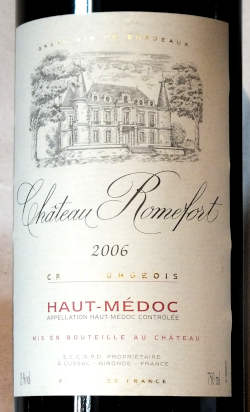
Cru bourgeois. These are wines from estates in the Medoc and Haut Médoc regions that were not classified in the 1855 listing. The "Cru Bourgeois" label was first attributed in 1920, and a numer of other chateaux and properties have obtained the classification since then - over 400 in all.. Generally speaking, the words "Cru Bourgeois" on a wine label are a good guarantee of quality, and since these wines are considerably cheaper than the Grands Crus, they usually represent excellent value for money.
Grand
cru
Label granted since 1855 to the 61 best estates in the Médoc
region,
producing some of France's reputedly greatest wines. See
Médoc. Also
used for wines from Saint
Emilion, and for the best Alsace
and Burgundy wines.
Medoc Grands crus
are classed in five groups, from Premier Grand Cru to
cinquième grand cru (5th group).
The
designation is also used in some other areas, notably Burgundy and
Alsace; but in Burgundy a "Premier cru" is a top quality wine, just
below a "Grand cru".
IGP See Vin de Pays
VDQS, or Vin Délimité de Qualité Supérieure , This was the second highest qualification for French wines, below Appellation Contrôlée. It accounted for about 2% of all French wines. Like Appellation Contrôlée wines, VDQS wines come from geographically delimited areas, and the methods that can be used and the volumes that can be produced are controlled. Many VDQS wines came from the Mediterranean area, Languedoc and Provence, and there were other VDQS areas in the Loire valley. While many VDQS wines were of medium quality, others could be really quite good, particularly those grown in regions that were working towards obtaining AOCstatus label. For example, in 2010, the "Côtes d'Auvergne" VDQS area qualified for AOC status from the 2011 vintage onwards. The VDQS label has now disappeared following EU-led clarification of geographic based quality labels, and a number of former VDQS wines have now become AOP wines, others have become Vins de pays.
Vin de France - A new label introduced in 2018, to allow greater consumer information and better marketing of table wines blended from different vineyard areas and different varieties. Until 2018, French table wines produced in this manner were just "vin de table", and could not legally carry a vintage label nor indicate the grape variety. French table wines can now therefore be marketed in the same way as those from other countries, whose blended wines face no such labeling restrictions.
Vin de Pays. The label "Vin de pays" has been phased out since 2009 , and replaced by the European IGP (Indication géographique protégée label- PGI in English). This category accounts for some 15% of French wine production, and covers wines that come from a designated area, the "pays", but do not have an AOP or AOC label. In short, they are the top end of the scale for everyday drinking wines. In some cases, they are produced from individual grape varieties, in others from a blend of grapes grown locally. Some vineyards and cooperatives that are not in an Appellation contrôlée area put all their expertise and skill into producing top quality IGP wines, with the result that it is now possible to get some extremely good value wines with this label.
Vin
de table / vin de France.
Ordinary everyday table wine, also known as "vin ordinaire". In English
slang, this is "plonk". Since 2018 the expression has been
replaced by
"Vin de France" (see above).
VALUE FOR
MONEY in French wine
- What - Where - When ?
Generally speaking, if you have two bottles of wine at the same price, choose the one with the lesser-known or less-prestigious label. For instance, in a French supermarket, 10 Euros will get you something at the cheap end of the more famous names (for instance a poor year), but at the top end of the less well known vineyards. If a bottle of Vin de Pays or vin IGP costs 15 Euros, it should be really good (otherwise there is no way they could sell it at that price) - but if you were to find a Grand Cru Bordeaux for this price (and it can happen), then it obviously has a problem..
Within given appellation protégée areas, go for the smaller and therefore lesser known estates or appellations. For example, in the Côtes du Rhône area, you will normally get better value for money with a Lirac (situated on the western banks of the river) than with its neighbouring but much more prestigious vineyard, Chateauneuf du Pape (on the eastern banks of the river).
With Clarets (wines from the Bordeaux area), you can often get really good quality wines at reasonable prices (from less than 20 euros in French supermarkets) if you look for "cru bourgeois" labels.
But remember, vintages vary considerably, so a cheap "cru bourgeois" may indicate a poor year. The areas covered by "appellation contrôlée" labels also frequently include hectares of land that produce wines of different qualities. There are "Margaux" wines with "Premier grand cru" status, but other Margaux wines with no more than the appellation.. The latter will probably be of good quality, indeed they may even be excellent, and if they are, will cost considerably less than their more illustrious namesakes; but there is no guarantee, particularly if they are still young.
Excellent value for money can also be had with good vins de pays; look out for vintage vins de pays that are being sold for twice the price of other vins de pays, or even a bit more. They will still be relatively cheap, but you may well find yourself with a wine that outclasses most of the ordinary AOC wines being sold at the same price, or even more expensively.
WHERE
There are two best bets; either from the producer, or from large supermarkets.
Producers usually offer good value for money, but this is by no means always the case. They may also sell at a premium to passing tourists, to make up for the relatively poorer prices that they get by selling to large distributors. However, there is often the pleasure of being able to taste the wine and choose the vintage or the variety that one likes best.
Large supermarkets, on the other hand, have such superior buying power that they can obtain far better prices from the producers that the individual visitor can. And when, as often happens, big chains run wine fairs, there are some extremely good bargains to be had. It should be said that the large supermarket chains (Carrefour, Casino, Auchan, Leclerc, etc) have their own professional buyers who know a lot about wine, and whose job is to get the best value for money and the best (or the cheapest) wines possible. Within a wine region, supermarkets will stock a good range of local wines, as well as a wide selection of wines from all over France, and even from other countries.
There is often a lot of snobbery in wines, both in France and in other countries. There are those who would think it quite beneath their dignity to respond at a dinner party to someone who comments on the wine, by saying; "Actually, it was 4 Euros from Leclerc ! " And there are those who insist on being able to say "I got it from my wine merchant, or from Jules, or from the estate." But if that means paying an inflated price for a mediocre wine (which may happen, specially in wineries geared to selling to passing tourists), who's the fool ?
Of course, the best way of all to buy wine is perhaps to get to know an area well, and to make the acquaintances of people who know the right people. Top class appellation contrôlée wines have to be sold off with less prestigious names if production exceeds the quota for the area, and naturally these "vins déclassés" are frequently sold to those who know, at knockdown prices. Also, many small producers keep a reserve of their own wines, often their best, for sale to friends and longstanding customers - so as usual, knowing the right people can be very useful. This kind of intimate knowledge does not feature in any wine guide.
WHEN
Undoubtendy the best moments are when supermarket chains run wine fairs or special offers. Wine fairs tend to take place in late September / Early october, at the time of the wine harvest, or just before Christmas. However French supermarkets and hypermarkets always stock a wide range of French wines, so there are good buys and bargains to be had at all times of the year. It is worth bearing in mind that the large supermarket chains have some very experienced buyers, and can also negotiate very good rates when buying in bulk.
CHAMPAGNE or other sparkling wines?
While nothing can beat a top quality Champagne, and while there are some very ropy sparkling wines to be found on some supermarket shelves - there is also a broad middle ground where many sparkling wines from Champagne have little apart from their name, the grape varieties used, and their price to distinguish themselves from good "mousseux" or "crémants" produced in other regions. There may be kudos to be gained by serving a genuine Champagne - but unless it's a top quality Champagne (which does not necessarily mean a big name), it is quite wrong to imagine that the Champagne will always be best. It will however almost always be more expensive.
Some excellent French AOP sparkling wines, available at a fraction of the price of equivalent quality Champagnes, include Crémant de Bourgogne from Burgundy, Crémant du Jura, Crémant d'Alsace, and Blanquette de Limoux - the original French sparkling wine which Champagne producers started to copy in the 17th century. There are also some excellent Loire valley AOP sparkling wines, including Vouvray and Montlouis. Most consumers will be quite unable to tell the difference.
To be quite frank, Champagne producers have over the years been quite masterful in the promotion and international marketing of their product, to the point at which today just the name Champagne on a bottle adds at least a dozen Euros to its the market value - if not much more. It's been an uphill battle all the way for producers of sparkling wines from other regions to get their good quality products recognised for what they are. And faced with the massive power of the big Champagne houses, the importance of Champagne as an export, and the nice markups that can be made on Champagne by wholesalers, exporters and retailers, the going is still hard for producers of non-Champagne sparkling wines.
So it pays handsomely to be in the know and forget about chic and kudos when looking for a good French bubbly. In 2019, 15 € will get you a rather cheap Champagne...... or a rather expensive Vouvray or Crémant; and while surprises are always possible, in most cases there will be no comparison.
| It's
all on the
label.... if you can understand what the label means. The
cost of
a bottle of French wine, and to a much lesser extent its quality, will
be determined by where it comes from, how it is made, and the quality
labels it benefits from. Understanding the writing on the label is a
first step to ensuring you get the right wine at the right price. The About-France.com wine guide: related pages |
| French wine 1: vineyards of France |
| The regions of France |
| French cheese page |
| Eating and meals in France |
About-France.com is an independent user-supported website that does not track visitors and carries very little advertising, Affiliate links to relevant partner websites may generate commission on sales at no cost to the user.
Copyright About-France.com
2003 - 2025